A Veritas Imagery service
Measuring and monitoring artificial light at night.
Artificial light at night (ALAN) is one of the fastest-growing forms of pollution. Skyglow is brightening by roughly 2% a year, and the great majority of people in Europe and North America can no longer see the Milky Way from home.
Night imagery, in colour.
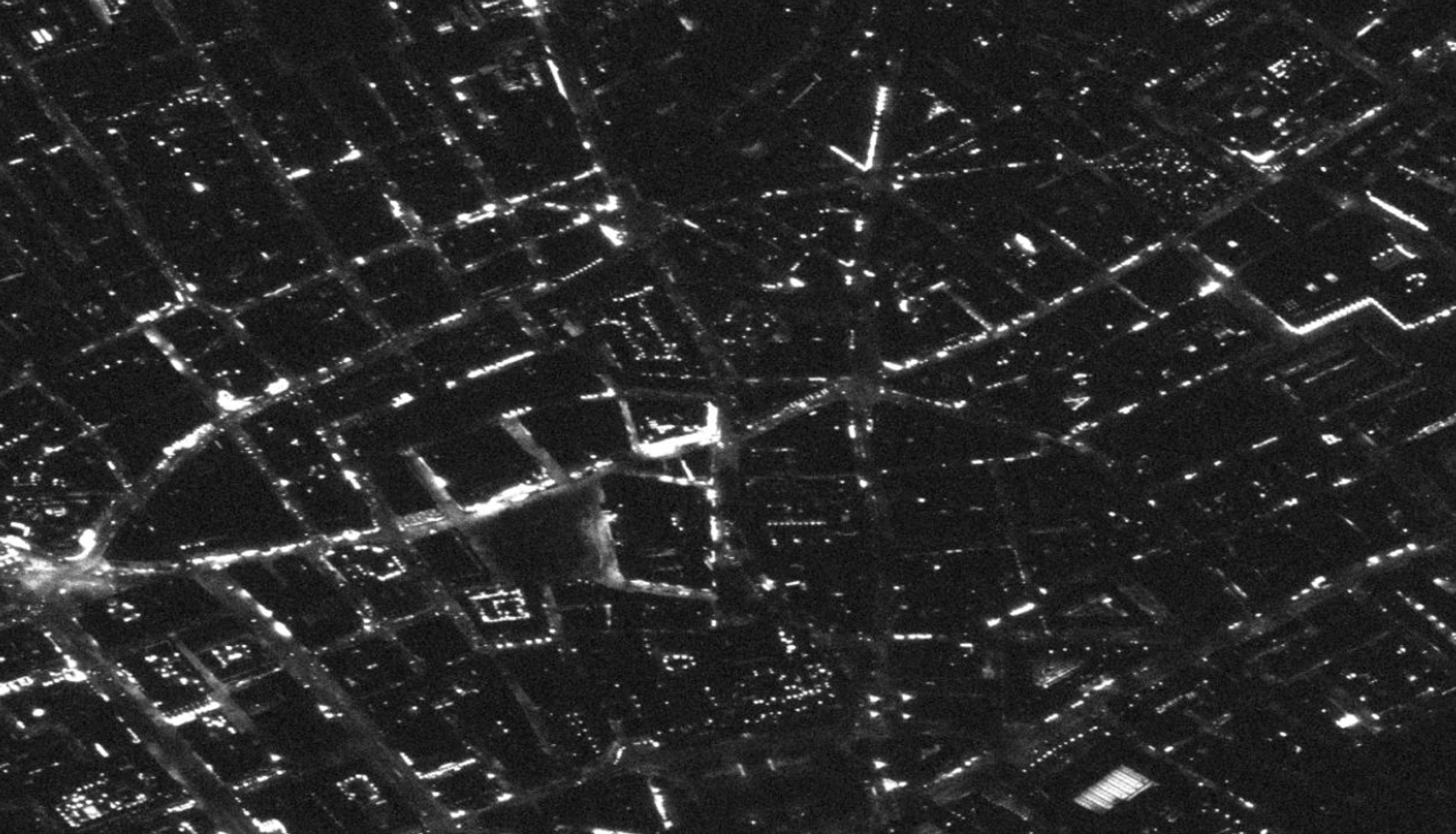
Almost every night-time sensor records a single brightness channel. That tells you how much light there is — not what kind. Colour separates one lamp technology from another, and lamp technology is where a lighting inventory, a spill measurement and a skyglow model all have to start.
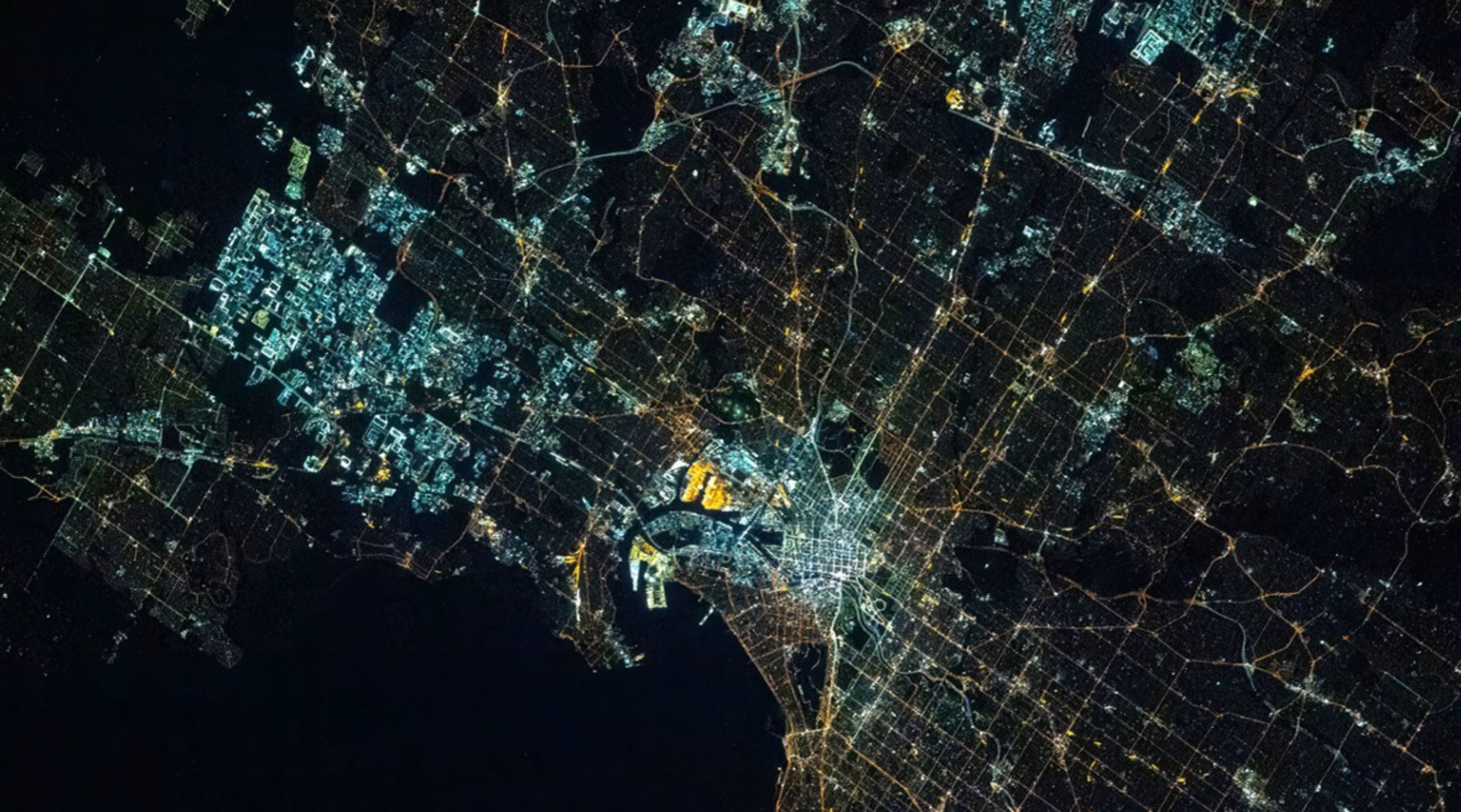
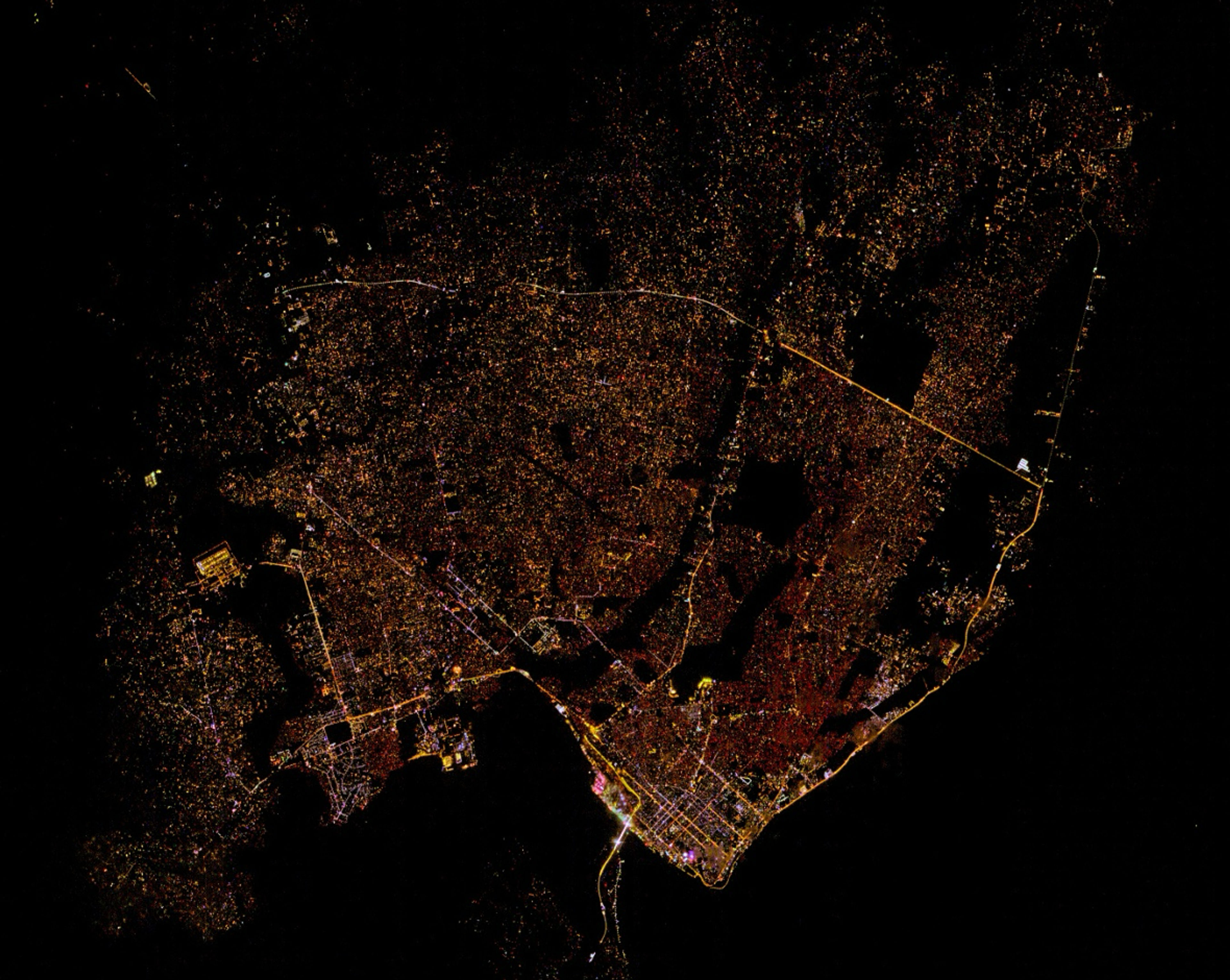
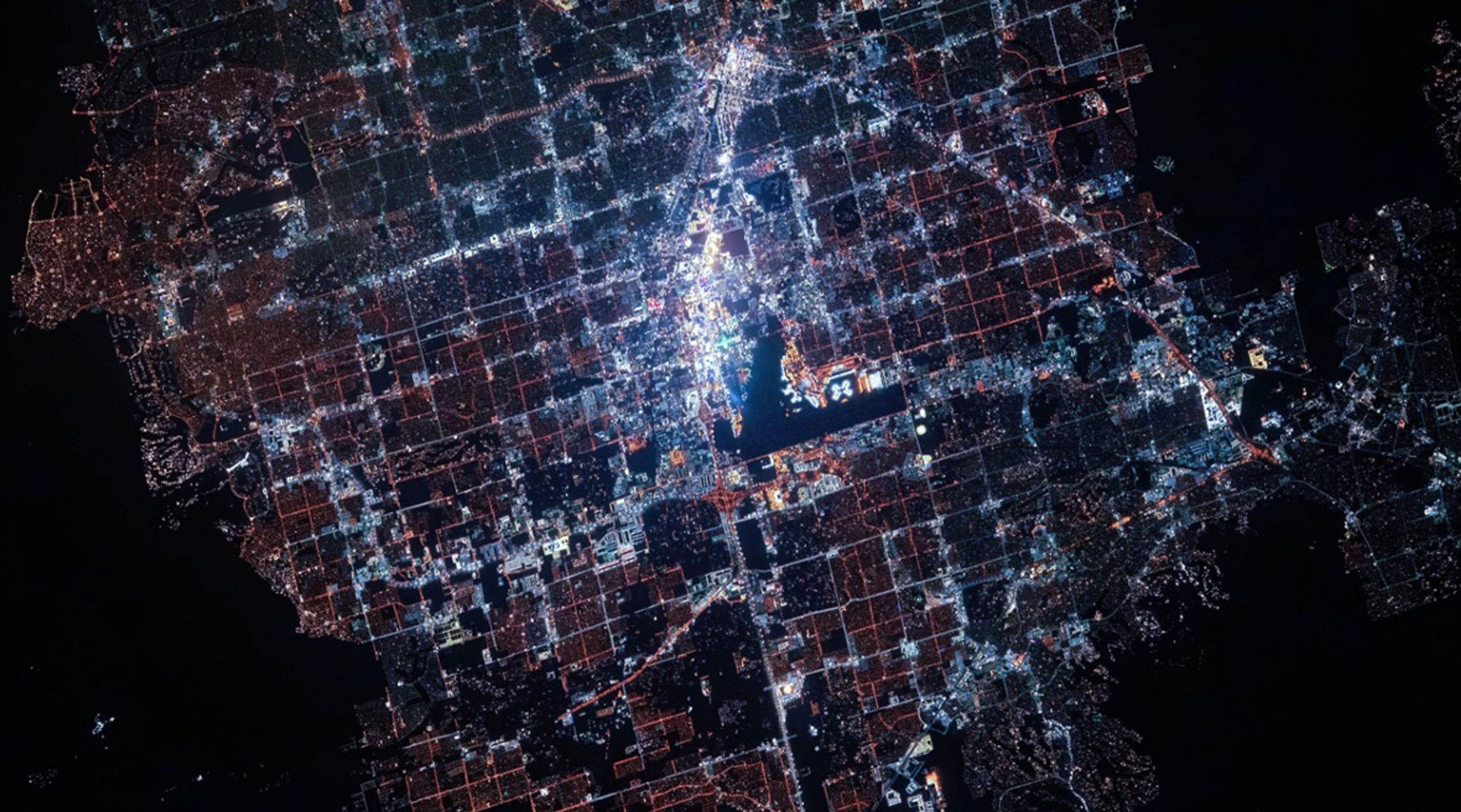
This SDGSAT-1 image shows how night-time imagery can be used over wide areas but with enough detail, at 10m resolution, to determine building level detail.
Light pollution
A pollutant that has gone largely unmeasured.
Most organisms evolved under a reliable cycle of day, night and moonlight, and use it to time migration, breeding, foraging and flowering. Artificial light scrambles those cues.
~2%
Annual brightening of skyglow
Year on year, and accelerating.
Most
Of Europe and North America
Can no longer see the Milky Way from home.

Wildlife and ecosystems
The cues that time the natural year.
Insects
PollinationInsects are drawn to lamps, where they die of exhaustion or predation. Nocturnal pollination by moths falls sharply near lit areas, and ALAN is considered a contributor to insect decline.
Birds
MigrationBirds become disoriented during nocturnal migration, colliding with lit buildings and towers; songbirds near streetlights sing and breed earlier in the season.
Sea turtles
CoastalSea turtle hatchlings head inland toward coastal lighting instead of the sea.
Bats, amphibians and small mammals
ForagingBats, amphibians and small mammals lose usable foraging time; frog chorusing and mating are suppressed. Light-tolerant predators gain an advantage, shifting predator–prey balance.
Plants
SeasonalityPlants near streetlights hold their leaves later into autumn and bud earlier, extending growing seasons unnaturally.
Aquatic systems
Algal bloomsAquatic systems are affected when zooplankton reduce their nightly vertical migration, weakening a natural brake on algal blooms.
Human health
Melatonin, sleep and the body clock.
Blue-rich light in the evening suppresses melatonin and shifts the body clock. The clearest consequences are shorter, more fragmented and poorer-quality sleep.
Beyond that, epidemiological studies associate high night-time light exposure with obesity, type 2 diabetes, cardiovascular disease and depressive symptoms. The International Agency for Research on Cancer classifies shift work involving circadian disruption as a probable human carcinogen, with the strongest signals for breast and prostate cancer.
Much of the evidence is observational and causal pathways are still being established. Until better methods of recording and monitoring light pollution are widely available, this neglected pollutant will continue unabated.
What can be done
The measurement problem is now solvable.
Until recently, the ability to widely record and monitor light pollution did not exist. New space-based sensors are now able to acquire data that can fundamentally change our ability to measure and monitor the impacts of ALAN.
Governments and international funding agencies now have the ability to develop policy, and to monitor the impact of major infrastructure projects in their territory.

The service
Calibrated measurement, not just imagery.
Veritas Imagery Services is a specialist provider of services to monitor ALAN. We use a wide range of space-based sensors and have the expertise to calibrate them to ensure that measurements are accurate. Dark Vision is our bespoke product, built on years of experience using night-time imagery for a wide range of end users.
Put a number on the light.
Tell us the territory and the question — a baseline, an infrastructure impact assessment, or a migratory corridor — and we'll scope the acquisition and the calibration behind it.